
Reflections by Jimmie Dale Gilmore on Joe Ely.
Interview conducted by: Charles “Chuck” Luck and Abi Avitia
Transcribed by: Madilyn Ellerbrook and Compiled by: Stacy Keith
 Before Americana had a name, three friends from Lubbock were already sketching its future in dust, harmony, and restless imagination. Jimmie Dale Gilmore, Joe Ely, and Butch Hancock did not set out to create a movement. Gilmore recalled that the beginning was more mysterious and more organic than that: old friends, shared songbooks, coffee houses, late-night rooms, and the strange luck of everyone returning to Lubbock at the same time.
Out of that moment came The Flatlanders, a band whose blend of country, folk, bluegrass, rock and roll, and West Texas storytelling seemed too unusual for the mainstream in the early 1970s—but too compelling to disappear. Their music would take the long way around, surfacing years later as a touchstone for listeners who heard in it the early shape of what would become alternative country and Americana.
The Flatlanders’ story begins in Lubbock, where the vast horizon of the Llano Estacado shaped more than the landscape. Gilmore recalled that he and Butch Hancock had known each other since 1957 at Atkins Junior High, though they did not become close musical companions until after high school, when each discovered the other had been playing music. Joe Ely entered through a different path. A couple of years younger, Ely was already playing in bands and doing solo work when he and Gilmore began crossing paths in coffee houses, pizza places, bootleg joints, and the old Elevator scene around town.
Gilmore described the early connection between him and Ely as one of mutual admiration. Ely brought rock, blues, Buddy Holly, and bandstand instincts; Gilmore brought folk, country, and songs learned from the folk-revival current that reached Lubbock not through radio, but through friends. Hancock, meanwhile, had a deep bluegrass repertoire. When the three returned to Lubbock in 1971—Gilmore from Austin, Ely from Europe, and Hancock from San Francisco—Gilmore arranged a night at Hancock’s house so Ely could hear Hancock’s songs. “From that night on, the three of us were just inseparable,” Gilmore said.
They were not called The Flatlanders at first. Gilmore remembered the group as a loose gang of friends before the record gave them a name. Originally, they called themselves the Super Natural Playboys, a name Nashville did not embrace. (The name was a homage to Tommy Hancock and the Roadside Playboys, which was a homage to Bob Wills and the Texas Playboys.) Demos were recorded in Odessa, later discovered to have been made at Tommy Allsup’s studio, and those recordings led to a deal with Shelby Singleton’s Plantation Records in Nashville. The project was originally promoted as Jimmie Dale and the Flatlanders before the band’s identity settled into the name fans know today.
Gilmore brought a voice that felt both ancient and futuristic: high, clear, spiritual, and unmistakably Texan. His singing could make a simple phrase feel like a question aimed at the sky. In the interview, he remembered doing most of the main singing on the original Flatlanders recordings, with Ely supplying the central harmony parts. That duet, Gilmore said, was what helped land the record deal.
Ely added motion. Where Gilmore often seemed to float, Ely drove the music forward with the urgency of highways, dance halls, border towns, and late-night stages. Gilmore remembered knowing from the beginning that Ely was “a professional musician”—not just a folk singer with a few chords, but a smart songwriter and versatile player on guitar, dobro, lap steel, and lead parts.
On stage, Gilmore said, Ely became “an explosion,” a performer whose electricity came through whether he was alone or fronting a high-powered band. “Joe would give as much to a three-person audience as a stadium full,” Gilmore reflected.
Gilmore said the original record by the Flatlanders was never truly released in any broad sense—only a small number of copies were sent out—because the music was marketed toward country rather than the folk and folk-rock audience that might have understood its experimental spirit. Years later, after Ely’s solo career had grown internationally, the record surfaced in England without the band even knowing it and eventually reached a broader American audience through Rounder Records. By then, the music was about 20 years old, but it sounded weathered and fresh, familiar yet strange.
Their later reunions proved that the magic was not just nostalgia. Gilmore credited Ely with keeping his and Hancock’s songs alive by recording them, and later with helping restart Gilmore’s own career as a producer and creative catalyst. In the early 2000s, Ely encouraged Gilmore and Hancock to write together again, which helped launch the later chapter of The Flatlanders. Albums such as Now Again, Wheels of Fortune, Hills & Valleys, and Treasure of Love showed three longtime friends still listening closely to one another, still finding new corners in old songs, and still carrying Lubbock’s wide-open spirit into the present. One example was Dallas. Gilmore recalled hearing Ely’s later arrangement for the first time. “He changed Dallas totally from the way I did it and how he and I did it together…It took me about two listens to really fall in love with it,” said Gilmore.
Gilmore said, “He loved the music and he loved the people. He never loved the business, but his love for music never fluctuated.”
What makes The Flatlanders endure is not simply that they influenced alternative country or helped pave the way for Americana. It is that their music sounds rooted without being fenced in. Gilmore, Ely, and Hancock made songs that could belong to Lubbock, Austin, Nashville, San Francisco, or nowhere in particular. They proved that regional music could be expansive, that friendship could be a creative engine, and that a band ignored in its own time could become essential later. Gilmore summed up their chemistry simply: he, Ely, and Hancock were each other’s audience and critics.
In the end, The Flatlanders’ story feels perfectly West Texan: a little mysterious, a little windblown, and bigger than it first appears. Gilmore gave it a celestial voice. Ely gave it velocity. Hancock gave it lyrical grit and wit. Together, they made music that waited patiently for the world to catch up. And through Gilmore’s memories, another dimension of Ely’s legacy comes into focus: not only the songs or the stages, but the way he loved the work and the people who came to hear it—whether the room held three listeners or a stadium full. “And that’s got to do with caring more about the music than the perks,” concluded Gilmore.
Joe Ely’s career changed American roots music, but as Gilmore remembers it, what never changed was the reason behind it. Long before Americana had a name, the music—and the people who gathered around it—were always the point.
“Dallas “ Joe Ely’s arrangement: HERE
“Dallas” The Flatlanders arrangement: HERE
Jimmie Dale Gilmore (born May 6, 1945) is an American singer-songwriter and actor, revered as a foundational figure in Americana and Texas progressive country music. Born in Amarillo, TX, and raised in Tulia and then Lubbock, TX, his unique style blends traditional honky-tonk with elements of folk, rock, and Eastern philosophy.
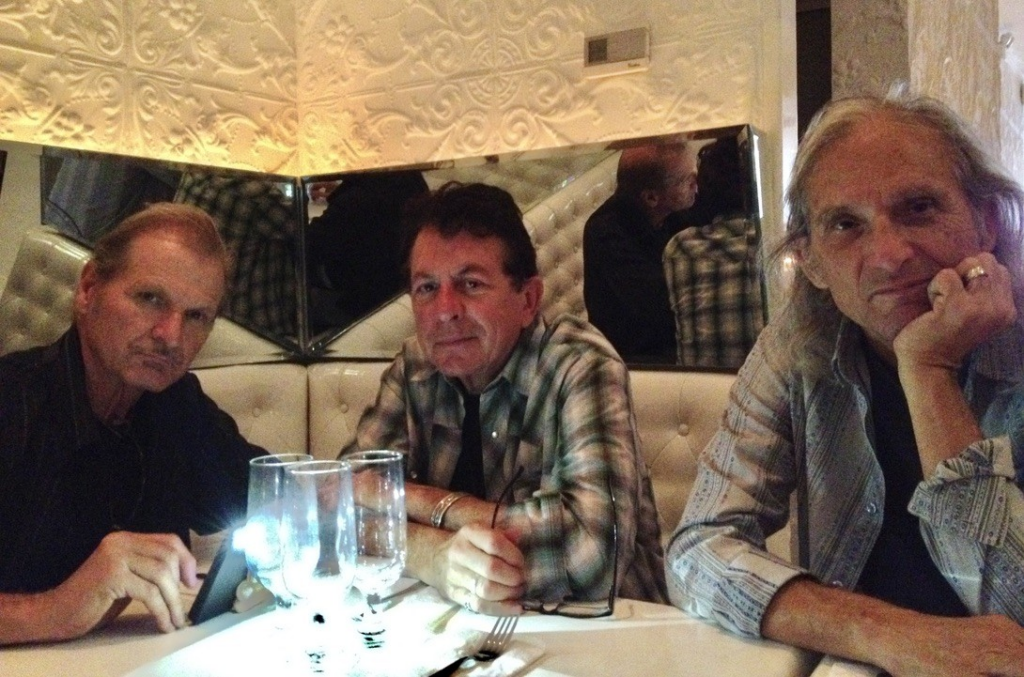
Photos taken by Janet Gilmore and use permitted by Jimmie Dale Gilmore. (Pictured are The Flatlanders: Butch Hancock, Joe Ely and Jimmie Dale Gilmore.)